Truck, Rail, or Both? Understanding Freight Access When Choosing a Warehouse Location
When businesses evaluate warehousing options, the conversation usually starts with square footage and price.
Those matter, obviously. But there's a factor that often has a bigger long-term impact on your costs and your flexibility: how freight actually gets in and out of the building.
Freight access shapes your shipping options, your per-unit costs, and how easily you can scale as your volume changes. Here's what to think through.
Truck Freight: Flexibility and Speed
Truck freight is the default for most businesses, and for good reason. It offers door-to-door delivery, faster transit for shorter distances, and far more scheduling flexibility than rail. If your shipments are time-sensitive, going to varied destinations, or moving in smaller quantities, trucking is usually the practical choice.
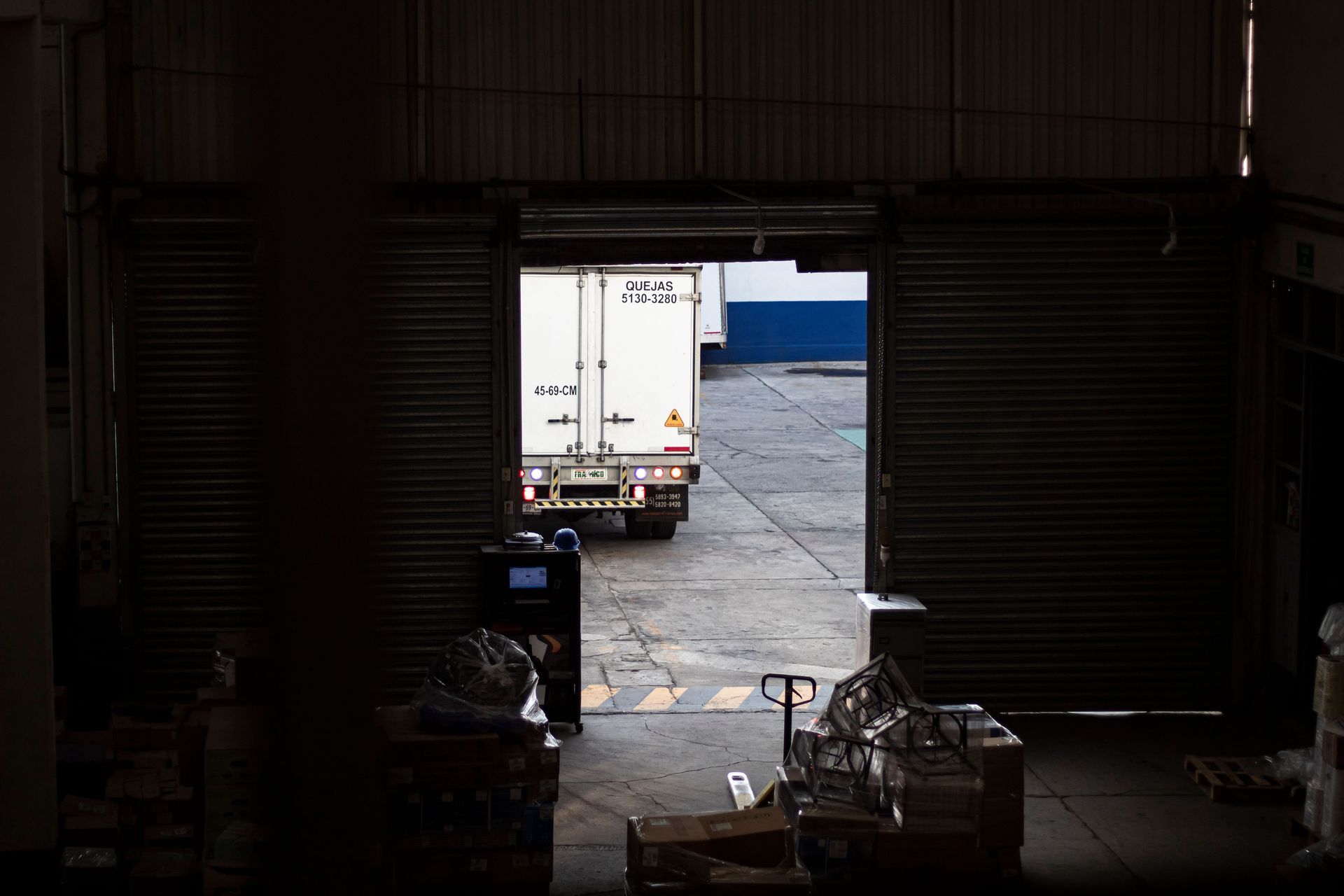
The key considerations on the truck side are access and capacity. Is the facility easily reachable from major highways without navigating congested surface streets or weight-restricted routes? Does it have enough dock doors to handle your inbound and outbound volume without creating scheduling bottlenecks? And can it accommodate the equipment you actually use, whether that's standard dry vans, flatbeds, or something more specialized?
A facility with direct interstate access saves real money over time. Every extra mile of surface street between the highway and the dock adds fuel, driver hours, and delay.
Rail Freight: Volume and Cost Efficiency
Rail is a different tool for a different job. For high-volume, non-time-sensitive freight moving long distances, rail is typically far more cost-efficient per ton than trucking. It's especially well-suited to bulk commodities, raw materials, and agricultural products moving in large quantities.
The tradeoffs are speed and flexibility. Rail schedules are less adaptable than trucking, and unless a facility has direct rail access, you're adding a truck leg on either end, which erodes some of the cost advantage.
That's why direct rail service at a warehouse is genuinely valuable. It means freight can move by rail all the way to the storage point without an intermediate transfer, capturing the full cost benefit.
Why Having Both Matters
Here's where it gets practical. Most businesses don't have a single freight profile. You might bring raw materials or bulk inventory in by rail to keep costs down, then ship finished product out by truck to meet customer delivery windows. Or your volume might shift seasonally in ways that make one mode more attractive at different times of year.
A facility that accommodates both truck and rail freight gives you the ability to choose the right mode for each shipment rather than defaulting to whatever the building can handle. That optionality is worth real money, particularly as fuel costs, carrier capacity, and freight rates fluctuate.
It also provides resilience. When trucking capacity tightens or rates spike, having a rail option available means you're not stuck.
Location Still Matters Underneath It All
Freight access is partly about the facility and partly about where it sits. A warehouse positioned between major markets, with direct highway access and rail service, is fundamentally more useful than one with the same features in a harder-to-reach location.
Consider your inbound suppliers and your outbound customers, and look for a facility that sits sensibly between them. Regional positioning that reduces total miles traveled will show up in your freight costs every single month.
Freight Access at 1000 Springs Warehouse
1000 Springs Warehouse in Buhl, Idaho was built with freight flexibility in mind. Our facility offers direct access to I-84 and U.S. Highway 30 for truck freight, along with rail accommodation for higher-volume shipments.
Our location in southern Idaho positions us centrally between Boise and Salt Lake City, making us a practical hub for businesses shipping throughout the Mountain West and across all 50 states. We also handle freight coordination directly, which means one less vendor relationship for you to manage.
Whether your freight moves primarily by truck, by rail, or some combination that shifts with your season, we can build a storage and logistics arrangement that fits how your business actually operates.
Contact us today to talk through your freight and storage needs.