What Is Lot Traceability in Warehousing, and Why Does It Matter for Food Brands?
Knowing how much inventory you have is important. Knowing exactly which inventory you have, where it came from, and where it went can be even more important.
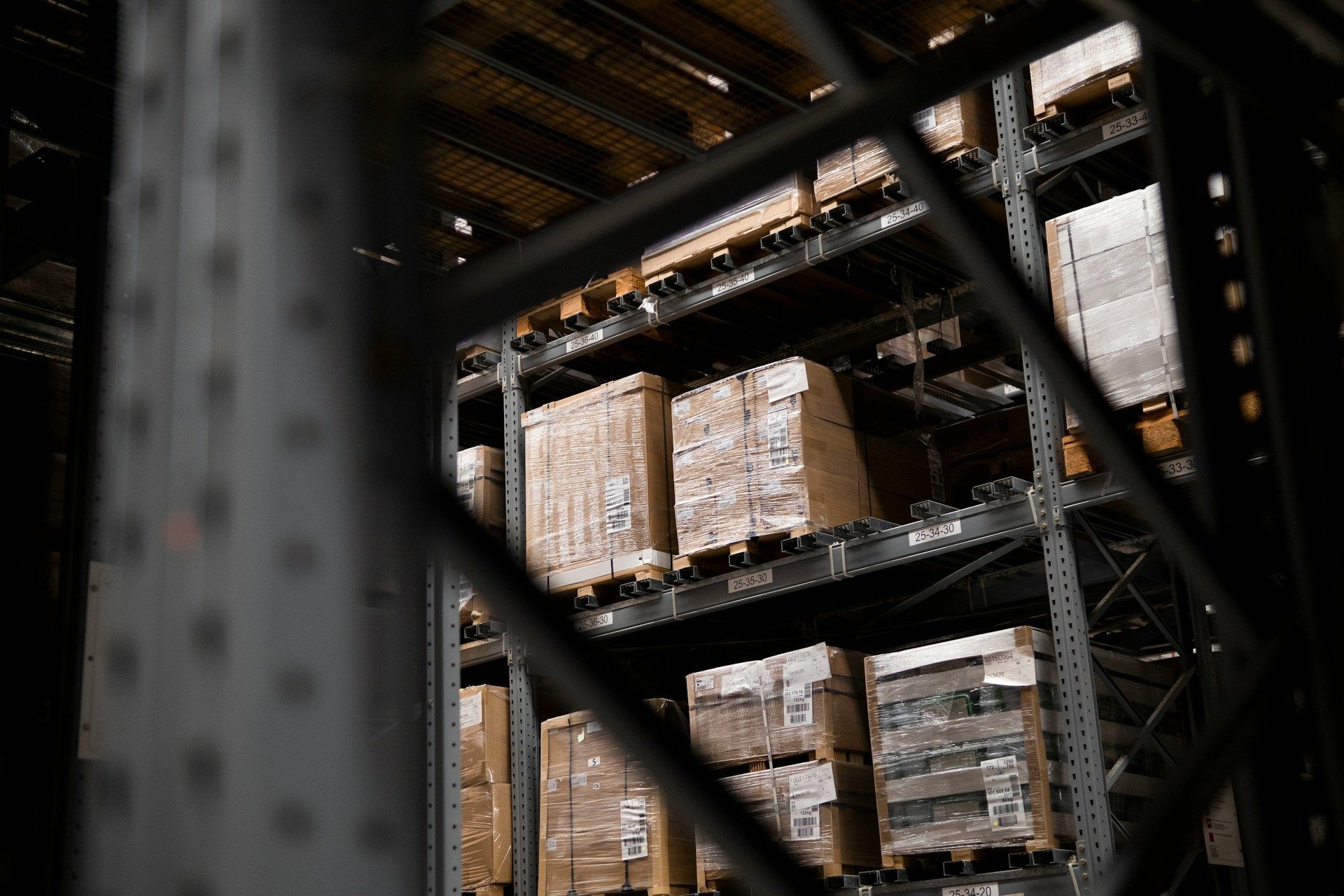
For businesses that manufacture, package, distribute, or sell food products, inventory management involves much more than counting boxes on warehouse shelves. Products can arrive from different production runs, carry different expiration dates, or require specific handling procedures.
When these details aren't properly tracked, even a relatively small inventory problem can become expensive and difficult to resolve.
That's where warehouse lot traceability comes into play.
At 1000 Springs Warehouse in Buhl, Idaho, we work with food producers, agricultural businesses, and distributors that need dependable storage and inventory visibility. Understanding how lot tracking works can help businesses make more informed decisions about their warehousing operations.
What Is Warehouse Lot Traceability?
Lot traceability is the process of identifying and tracking groups of products as they move through storage and distribution.
A lot typically represents a defined group of products associated with a particular production run, batch, or other identifying criteria established by the manufacturer.
For example, imagine an Idaho food producer manufactures 10,000 bags of dried beans during one production run and another 10,000 bags two weeks later.
Although the finished products might look identical, the manufacturer assigns different lot numbers to distinguish the two batches.
Those lot numbers allow the business to identify which products belong to each production run, even after the inventory enters a third-party warehouse.
A warehouse with appropriate lot tracking capabilities can associate products with identifying information, quantities, storage locations, and inventory movements.
Rather than knowing only that 20,000 bags are in storage, the business can determine which batches are present and how those products are moving through the supply chain.
Why Is Lot Tracking Important for Food Storage?
1. It Supports More Targeted Product Recalls
Product recalls are among the most serious operational challenges a food business can face.
If a manufacturer discovers a potential problem with a particular production batch, it needs to determine which products may be affected and where they were distributed.
Without reliable lot-level records, identifying the affected inventory becomes considerably more difficult.
Businesses may need to investigate a broader range of products because they cannot confidently distinguish one production batch from another.
Lot traceability helps narrow that investigation.
When production information, warehouse records, and shipment documentation are properly connected, businesses can identify potentially affected inventory more efficiently.
Traceability alone doesn't prevent recalls or guarantee regulatory compliance. However, accurate lot records are an important part of an effective product safety and recall management program.
2. It Helps Prevent Inventory Mix-Ups
Food distributors frequently manage products that appear nearly identical.
A warehouse might receive several shipments of the same product from the same supplier, with each shipment carrying a different production or expiration date.
Without adequate tracking, newer inventory could be shipped before older inventory that should have been distributed first.
This can create avoidable waste, customer complaints, or problems with product shelf life.
Lot-level inventory management allows businesses to establish appropriate stock rotation procedures and identify which inventory should be selected for shipment.
For products with expiration dates, this distinction can be particularly valuable.
3. It Provides Better Supply Chain Visibility
When inventory is stored at an outside facility, business owners need confidence that they can obtain accurate information about their products.
A basic inventory count may tell you that 500 cases are available.
A more detailed inventory record can provide additional information, such as the product's lot identification, receipt history, storage location, and movement records.
These details support purchasing decisions, customer service, production planning, and shipment coordination.
They can also help teams investigate discrepancies without relying entirely on manual searches or paperwork.
For a growing food brand, having dependable inventory information becomes increasingly important as the number of customers, products, and shipments increases.
FIFO vs. FEFO: Understanding Inventory Rotation
Two common inventory rotation methods are FIFO and FEFO.
Although these terms sound similar, they serve somewhat different purposes.
FIFO: First In, First Out
FIFO generally prioritizes shipping inventory that entered storage first.
For example, if a warehouse receives 100 cases of a product on Monday and another 100 cases on Friday, a FIFO system would generally select the Monday inventory first.
This approach can help businesses maintain a consistent inventory flow and avoid leaving older stock in storage unnecessarily.
However, the earliest inventory received isn't always the inventory with the nearest expiration date.
FEFO: First Expired, First Out
FEFO prioritizes inventory according to its expiration or designated shelf-life date rather than simply its arrival date.
Consider a warehouse that receives a shipment of food products in January with a December expiration date.
In February, another shipment arrives with an October expiration date.
Under a strict FIFO approach, the January shipment would normally be distributed first.
Under FEFO, the February shipment may be prioritized because its products expire sooner.
For businesses handling date-sensitive inventory, FEFO can be an important strategy for reducing waste and maintaining appropriate shelf life.
The appropriate rotation method depends on the product, customer requirements, and operating procedures.
When evaluating a warehouse, ask how its inventory management system supports your preferred rotation rules and whether exceptions can be documented.
How a Warehouse Management System Supports Lot Traceability
A warehouse management system, commonly called a WMS, helps organize and track products as they move through a facility.
Instead of relying solely on handwritten records or disconnected spreadsheets, a WMS creates structured inventory records.
Depending on its configuration, the system may track:
- Product names and stock-keeping units (SKUs)
- Lot and batch numbers
- Quantities received and shipped
- Storage locations
- Inventory movements
- Expiration or best-by dates
- Receiving and shipping documentation
This information can help warehouse staff identify products more accurately and provide customers with useful inventory reports.
Barcode labeling and scanning can also support the process by connecting physical products to their digital records.
At 1000 Springs Warehouse, our services include digital inventory management, real-time tracking, lot traceability, and labeling and barcoding capabilities.
These services help businesses establish greater visibility over the products they store and distribute.
Lot Traceability and Organic Food Products
For organic food brands, accurate product identification is especially important.
Organic products may require additional documentation and handling controls to maintain their integrity throughout the supply chain.
Businesses need to understand how products are identified, segregated when necessary, and documented during storage and distribution.
Lot tracking supports these processes by helping businesses maintain records associated with specific inventory.
However, lot traceability is only one part of organic handling. Proper procedures, applicable certifications, and compliance with relevant organic regulations remain essential.
For more information, read our article on protecting organic certification during storage.
What Should You Ask a Warehouse About Inventory Tracking?
Before selecting a commercial warehouse, ask a few practical questions about its inventory management capabilities.
Can you track inventory by lot number?
Find out whether the facility can distinguish individual product batches rather than tracking only total quantities.
How are incoming products recorded?
Ask what identifying information and documentation are required when shipments arrive.
Can you provide inventory reports?
Understand which reports are available, how frequently information is updated, and how customers can access it.
How do you handle inventory discrepancies?
Learn what happens if receiving counts, product labels, or shipping records don't match expectations.
Can you accommodate special inventory requirements?
Some businesses need particular rotation procedures, expiration-date information, or product-specific documentation.
Understanding these capabilities before moving inventory can help prevent operational surprises later.
Reliable Inventory Tracking Starts With the Right Warehouse Partner
As food businesses grow, reliable inventory management becomes an increasingly valuable part of their operations.
Lot traceability helps companies maintain better visibility over stored products, improve inventory rotation, support recall investigations, and coordinate distribution more effectively.
At 1000 Springs Warehouse in Buhl, Idaho, we provide SQF-certified food-grade storage supported by warehouse management technology and lot traceability services.
Our team works with agricultural producers, food brands, distributors, and other businesses throughout southern Idaho and the surrounding region.
Whether you're storing bulk agricultural commodities, packaged food products, or inventory headed to retail customers, having an organized warehousing system can make a meaningful difference.
Looking for food-grade warehouse storage with inventory tracking capabilities?
Explore our warehousing and logistics services, or contact 1000 Springs Warehouse to discuss your storage requirements.
You can also call us at (208) 543-2111 to learn more about our facility in Buhl, Idaho.