Why Buhl, Idaho Is a Strategic Warehousing Hub Between Boise and Salt Lake City | 1000 Springs Warehouse
When businesses are evaluating a warehousing or distribution partner, location is one of those factors that looks simple on the surface and turns out to matter enormously in practice.
It's not just about whether a facility is close to your operation. It's about where that facility sits in relation to your customers, your freight lanes, and the carriers that service your region. A warehouse in the wrong spot can quietly add days and dollars to every outbound shipment. A warehouse in the right spot does the opposite — it compresses lead times, reduces LTL costs, and makes your distribution footprint look a lot more capable than it might otherwise be.
Buhl, Idaho is one of those right spots. And it's one that most businesses outside of southern Idaho haven't thought about yet.
The Geography Makes the Case
Buhl sits in Twin Falls County, in Idaho's Magic Valley — roughly midway between Boise and the Utah border, right along the I-84 corridor. That position puts it within reach of a regional footprint that covers a significant chunk of the western United States without the congestion, cost, and infrastructure strain of warehousing in a major metro.
Here's a rough sense of the distances from Buhl:
MarketApproximate DistanceBoise, ID~120 milesTwin Falls, ID~15 milesPocatello, ID~110 milesSalt Lake City, UT~220 milesPortland, OR~450 milesSeattle, WA~530 milesReno, NV~390 milesSpokane, WA~320 miles
That puts Buhl within a single day's drive of most major Pacific Northwest and Mountain West population centers. For LTL freight, that's meaningful — it's the difference between a two-day lane and a one-day lane for a lot of western markets. For full truckload, the math is even cleaner. A centrally-located hub reduces the total miles your product spends on the road, which reduces your cost per delivery and your exposure to carrier capacity constraints.
I-84 Is One of the Most Important Freight Corridors in the West
Interstate 84 doesn't get the same press as I-10 or I-95, but for western freight it's one of the most strategically important highways in the country. It runs from Portland on the Pacific Coast through the Columbia River Gorge, across southern Idaho, and down into Utah — connecting Pacific Northwest ports and manufacturing to Mountain West distribution, with direct links to I-15 (the north-south spine of the Mountain West) and I-82 (the gateway to the Yakima Valley and eastern Washington).
1000 Springs Warehouse sits right off that corridor, with direct semi-truck access and connections to both I-84 and U.S. Highway 30. For businesses shipping into or out of the Pacific Northwest, that's a structural advantage. Inbound freight from Pacific ports routes through naturally. Outbound freight to Salt Lake, Denver, Phoenix, or southern California moves with minimal detour.
Rail Access Adds Another Option
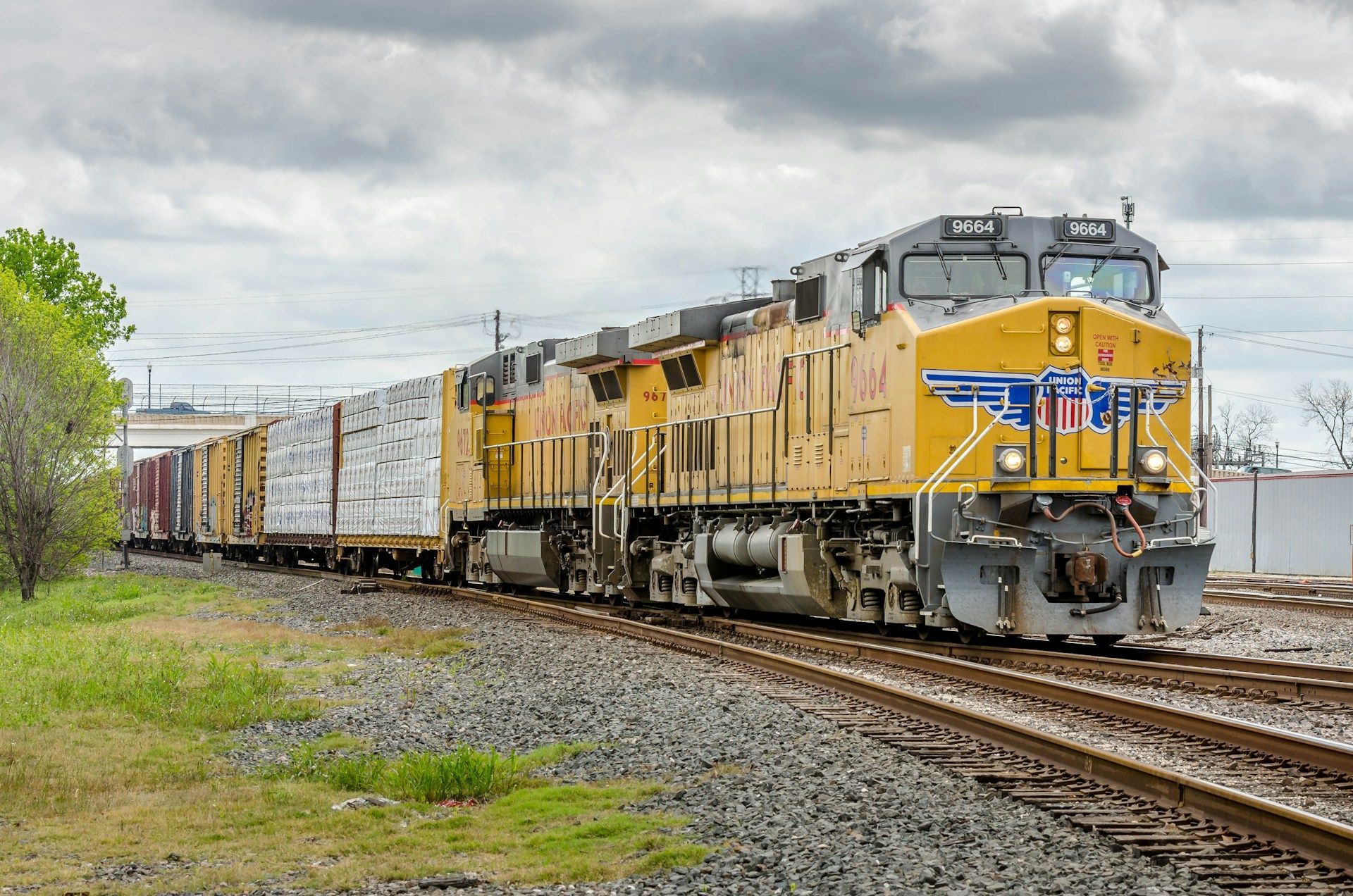
Not every warehouse in the region has rail access, but 1000 Springs does. Direct rail connectivity means businesses with large-volume, heavy, or bulk product needs have an alternative to relying entirely on over-the-road trucking — which has become increasingly valuable as freight capacity tightens and fuel costs fluctuate.
For agricultural commodities, industrial supplies, and bulk food ingredients in particular, rail is often the most cost-effective way to move volume. Having a warehouse that can receive and stage rail shipments removes a significant coordination step from the supply chain.
Why Central Matters for Multi-State Distribution
One of the real advantages of a centrally-located warehouse is that it reduces the need for multiple regional distribution centers. If you're serving customers across Idaho, Utah, Oregon, Washington, and Nevada from a single facility in Buhl, you can do it efficiently. The geographic center of that footprint is roughly where Magic Valley sits.
That's relevant for businesses that have been running product from a single warehouse on the West Coast or in the Salt Lake metro and watching their delivery times to the Pacific Northwest stretch out. It's relevant for businesses that are growing their western distribution and want a secondary facility that doesn't require building a whole new operational presence in a major city. And it's relevant for out-of-state brands entering the Pacific Northwest market who want a local staging point without the overhead of a Portland or Seattle facility.
The Other Side of the Location Equation
Infrastructure is part of the location story, but it's not all of it. The other part is the operating environment.
Commercial real estate costs in the Magic Valley are a fraction of what equivalent warehouse space costs in Boise, Salt Lake City, Portland, or Seattle. That lower cost structure gets passed through in the form of more competitive storage and handling rates. Labor markets in southern Idaho are stable. The regulatory environment for commercial operations is business-friendly. And the proximity to Idaho's agricultural production belt means that food-grade and organic storage is genuinely part of the regional supply chain fabric here — not an afterthought.
For businesses that have been warehousing in a major metro because that's where their operations started, the question worth asking is whether the metro location is still earning its premium. For a lot of western distributors and food brands, a well-located facility in the Magic Valley makes more operational and financial sense than they'd expect.
What 1000 Springs Warehouse Offers at This Location
The facility covers 218,800 square feet of indoor space, SQF-certified and FDA-compliant for food-grade storage, plus 17.5 acres of gated outdoor storage for oversized product, equipment, and overflow. Services include ambient storage, real-time inventory management through a warehouse management system (WMS), cross-docking, lot traceability, private label packaging, custom palletizing, barcoding, and freight assistance for both inbound and outbound shipments.
It's a full-service operation at a location that genuinely earns its place on a western distribution map.
Worth the Conversation
If you're mapping out your warehousing or distribution footprint for the Pacific Northwest and Mountain West — or if you're currently running out of a facility that's costing more than it should for the service area you're covering — Buhl is worth a look.
The location advantage is real. The infrastructure is in place. And the team at 1000 Springs Warehouse is happy to walk through the geography and the numbers with you before you make a decision.
Contact 1000 Springs Warehouse to learn more about our location and services.